World War 1 Propaganda Posters: Did Kitchener’s Poster Work?
Published · Revised
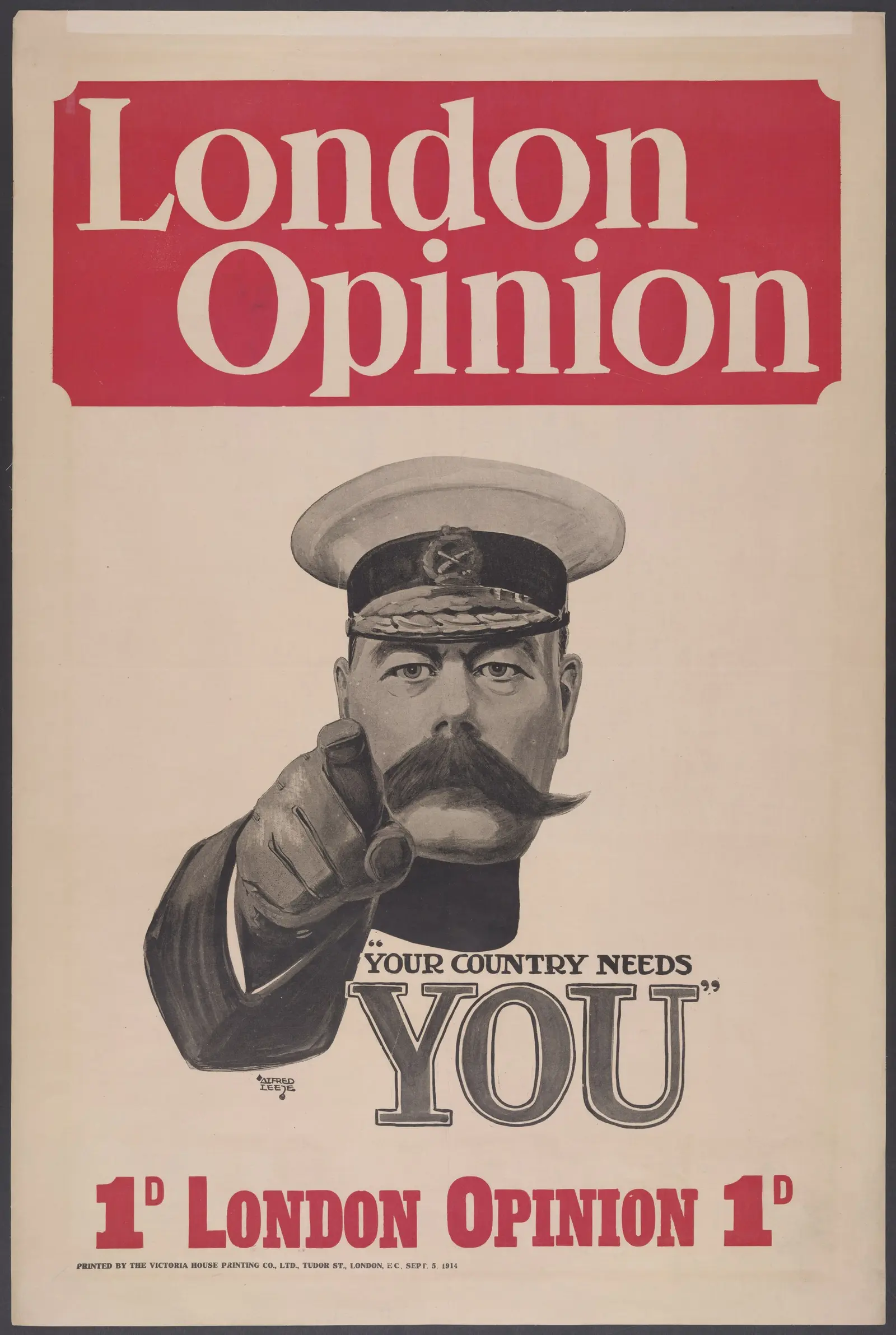
TL;DR: World War 1 propaganda posters came from many artists and printers, and this page starts with one of the best known, then lists six more. Alfred Leete's pointing Lord Kitchener was “dashed off” for the cover of the weekly London Opinion in September 1914, per Country Life. How much it drove recruiting is disputed.
Collation: screenprint with halftone, color · 76.3 × 50.8 cm sheet (30.0 × 20.0 in, computed as cm ÷ 2.54) · image September 1914 (magazine cover), per Country Life / object 1914, per the LoC record as quoted on Commons · Library of Congress, LCCN 93517736, digital ID ppmsca.37468
Full credit
"London opinion: Your country needs you" by Alfred Leete — https://commons.wikimedia.org/wiki/File:London_opinion_%22Your_country_needs_you%22_-_Alfred_Leete._LCCN93517736.jpg — Public domain (Alfred Leete, 1882–1933, per the Library record quoted on the file page; poster dated 1914. United States: published before 1931. European Union: author dead more than 70 years.); Library of Congress, LCCN 93517736; modified: scaled down to 2600 px on the long edge
Collation card, all fields
- Object
- London opinion "Your country needs you" commons.wikimedia.org
- Type
- print commons.wikimedia.org
- Process
- screenprint with halftone, color commons.wikimedia.org
- Format & size
- 76.3 × 50.8 cm sheet (30.0 × 20.0 in, computed as cm ÷ 2.54) commons.wikimedia.org
- Material
- not stated in the record read commons.wikimedia.org
- Made
- image September 1914 (magazine cover), per Country Life / object 1914, per the LoC record as quoted on Commons countrylife.co.uk
- Held at
- Library of Congress, LCCN 93517736, digital ID ppmsca.37468, lccn.loc.gov commons.wikimedia.org
- Date basis
- Holding record: LoC date 1914, as quoted on the Commons file page; holding page not readable, not traced back, 2026-11-07. Literature: image date per Country Life commons.wikimedia.org
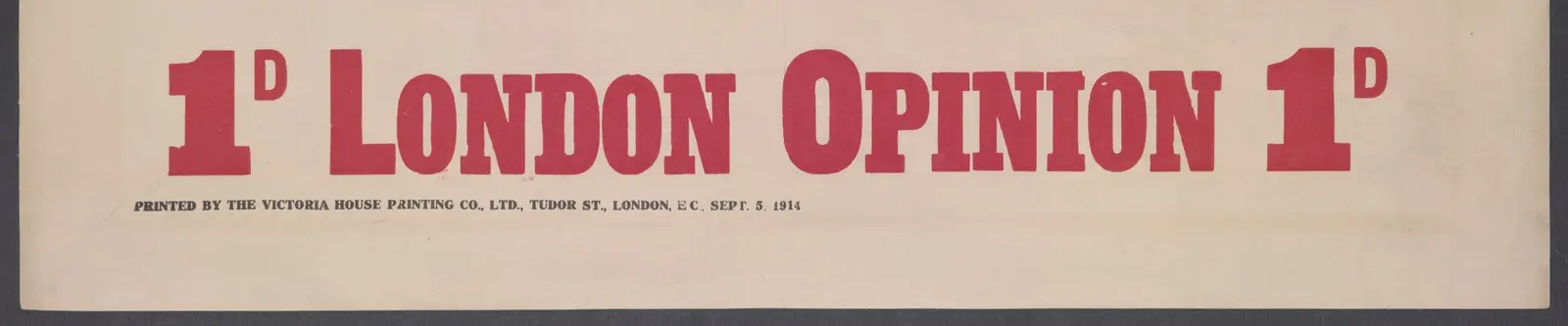
Read the small print at the foot of this poster. The Library of Congress record, as quoted on the Wikimedia Commons file page, doesn't transcribe that line and dates the sheet only 1914, so the detail below shows the line without a reading here. This page uses that one sheet as its way into World War 1 propaganda posters, and a later section lists six others from the same years. The question here is how a drawing made for a weekly magazine ended up on a sheet like this.
How did a magazine cover become a poster?
Look at what the record names. Its title, taken from the item, starts with London Opinion and goes on to “Your country needs you”, and it names no army office. The Library still files the sheet under recruiting and enlistment, a subject heading on the same file page, and an entry in the encyclopedia 1914-1918-online says Leete's Britons design was issued by a magazine.
Full credit
"Foot of the sheet" by Alfred Leete — https://commons.wikimedia.org/wiki/File:London_opinion_%22Your_country_needs_you%22_-_Alfred_Leete._LCCN93517736.jpg — Public domain (Alfred Leete, 1882–1933, per the Library record quoted on the file page; poster dated 1914. United States: published before 1931. European Union: author dead more than 70 years.); Library of Congress, LCCN 93517736; modified: cropped to the lowest 14 percent of the sheet, scaled down to 1800 px wideCountry Life traces the drawing to the magazine's cover in September 1914 and says it apparently replaced another cartoonist's work that the editor had turned down. That is one magazine feature, not a primary record, although a caption in 1914-1918-online separately says the famous Britons poster came from a London Opinion cover design.
Those accounts raise the double date: every document object has the date of its content and the date the physical thing was made. The image dates to the September 1914 cover, per Country Life, while the record gives this sheet only 1914, so the two dates may be close, and no record read for this page settles it.
This page can't show you the cover itself.
A Commons file named as the 1914 cover carries the same Library digital ID, ppmsca.37468, and the same pixel size as this poster, and it shows this same sheet down to the foot line. No scan of the magazine itself was read for this page, so what the cover looked like is left out here.
The wording moved around as the drawing did. The 1914-1918-online caption describes the better-known Britons (Lord Kitchener) Wants You and says a second version, from the printers David Allen & Sons, added flags, more text and the magazine's slogan. It gives the Imperial War Museums number Art.IWM PST 2734 for Britons, but that museum's site could not be read for this page.
Made: what the record says about screenprint and halftone
The Library's record, as quoted on the Commons file page, calls this one print, a poster, in “screenprint with halftone, color”, and gives the sheet as 76.3 by 50.8 cm, or 30.0 by 20.0 inches (cm ÷ 2.54). The Library's own page returned a block when tried on 2026-11-07, so that wording is read second hand. A subject heading on the same file page, screen prints, comes from that same record, so the process rests on one source.
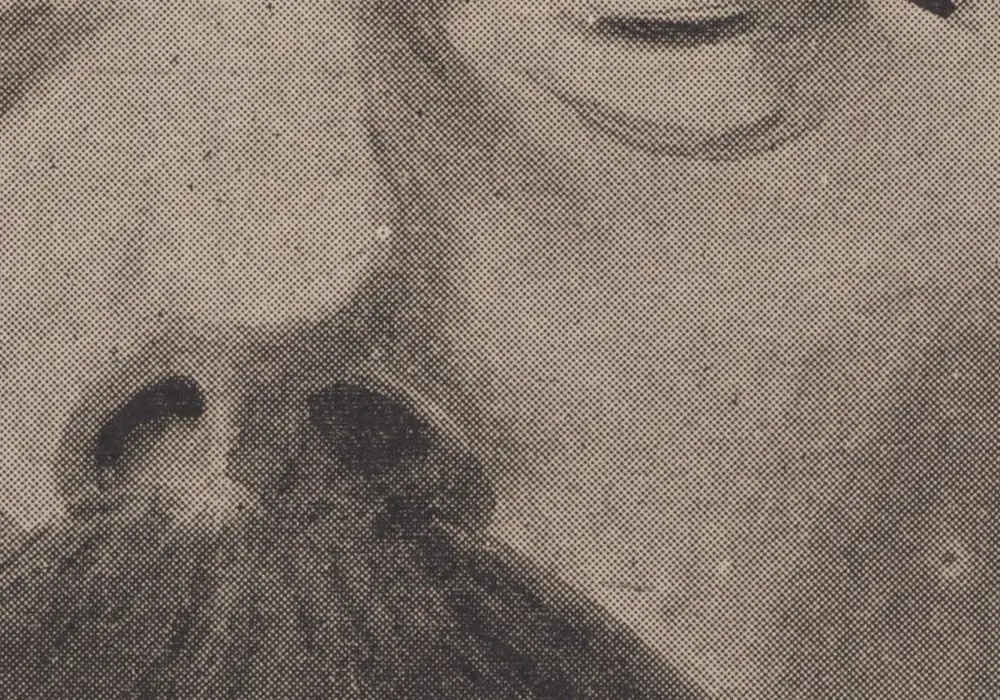
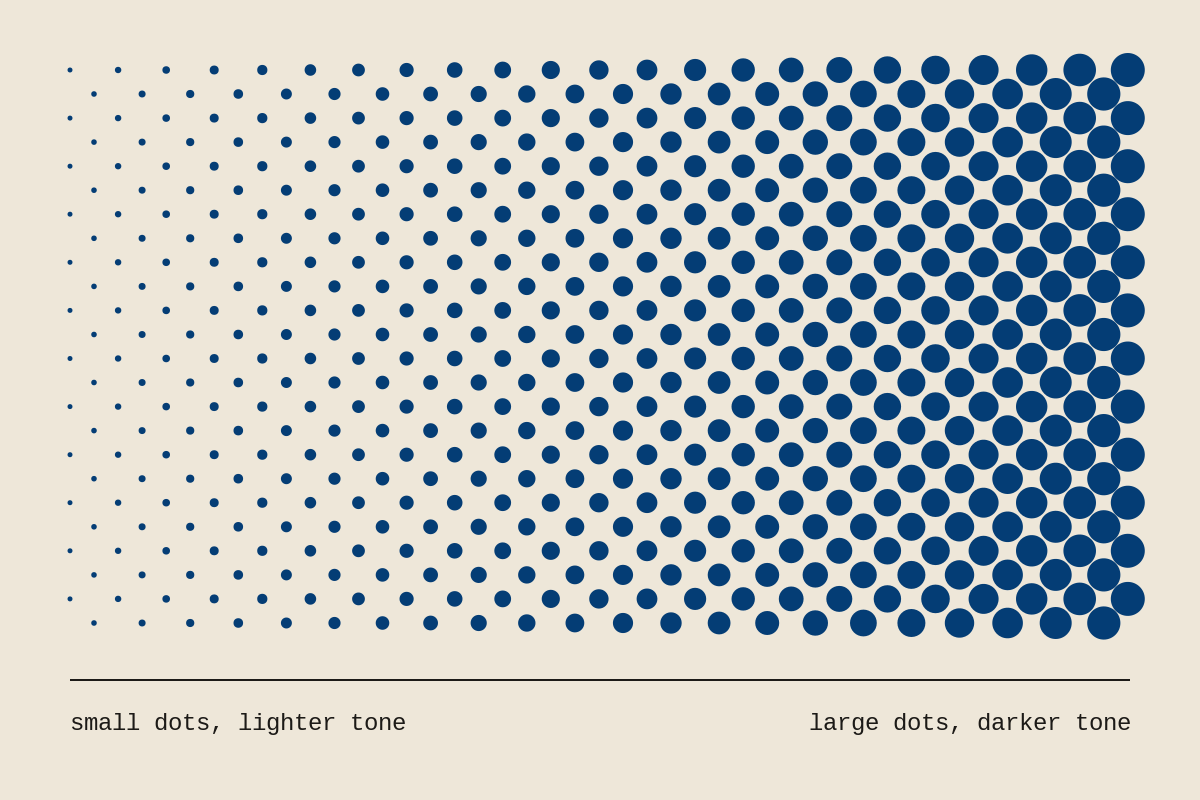
The two words point in different directions. Getty's Art & Architecture Thesaurus (AAT) describes screen printing as a stencil technique, with ink forced through a mesh. Its entry for relief halftone, one kind of halftone, describes small raised dots of varying size, made by photographing a photograph again through a ruled screen. The record doesn't say which part of the sheet came from which step, so the three families of print process can't place it, and this poster needs its own process record.
Full credit
"Detail of the face" by Alfred Leete — https://commons.wikimedia.org/wiki/File:London_opinion_%22Your_country_needs_you%22_-_Alfred_Leete._LCCN93517736.jpg — Public domain (Alfred Leete, 1882–1933, per the Library record quoted on the file page; poster dated 1914. United States: published before 1931. European Union: author dead more than 70 years.); Library of Congress, LCCN 93517736; modified: cropped to 1000 x 700 px at the resolution of the file, not scaledNow zoom in on the face. The gray breaks into an even grid of dots, smaller in the pale cheek and larger in the moustache, which fits the record's word halftone. The photograph can't tell you how those dots reached the paper, so the process word stays the Library's.
Credit line to copy
"Small Dots, Large Dots" by Spine & Watermark, https://spineandwatermark.com/print/world-war-1-propaganda-posters/, licensed under CC BY 4.0 (https://creativecommons.org/licenses/by/4.0/).Another account uses another word. The 1914-1918-online entry calls the portrait on the Britons design lithographic, but that describes a different design, and neither account has been read against the object. So this page gives the Library's wording for the Library's sheet and doesn't choose between them. The small type at the foot raises one more question, since letterpress prints from raised metal type, and no record read says how that line was set.
No record read for this page says how many copies were printed.
Lived: two exhibitions and a pale strip
The notes quoted on the file page list two showings: “Everybody's Uncle Sam” at the Library in 1995, and “The Mobilization of Imagery” at the Museum für Kunst und Gewerbe in Hamburg from June to November 2014. This site calls a mark left by use rather than by making the handling scar. No handling scar can be confirmed from the record, though a pale strip runs along the top edge in the photograph, cause not established.
Which other World War 1 propaganda posters can you check?
The Library of Congress research guide says its World War I posters number more than 1,900, span 1914 to 1920, and come from the United States, France, Great Britain, Germany and other countries. So seven sheets are a small sample. They are here because a death year for each artist could be read, which is the first thing to check before reusing an image.
| Poster | Artist (died) | Sheet date on the file page | Process as recorded | Height × width (cm) | 70-year count ends | Held at, per the file page |
|---|---|---|---|---|---|---|
| London Opinion “Your country needs you” | Alfred Leete (1933) | 1914 | screenprint with halftone, color | 76.3 × 50.8 | 2003 | Library of Congress, LCCN 93517736 |
| 2me Emprunt de la Defense Nationale | Alcide Théophile Robaudi (1928) | 1916 | offset lithograph, color | 119 × 80 | 1998 | Library of Congress, LCCN 99613513 |
| 6. Kriegsanleihe! 10. Mai bis 8. Juni 1917 | Wilhelm Dachauer (1951) | 1917 | lithograph, color | 126 × 95 | 2021 | Library of Congress, LCCN 2006680286 |
| Helft uns siegen! | Fritz Erler (1940) | 1917 | colored lithography | not given | 2010 | Imperial War Museums, no number given; date and process from the Commons description, museum record not readable |
| Destroy this mad brute. Enlist - U.S. Army | Harry Ryle Hopps (1937) | 1917 | lithograph | 106 × 71 | 2007 | Library of Congress, digital ID LC-DIG-ds-03216 |
| That liberty shall not perish from the earth | Joseph Pennell (1926) | 1918 | lithograph, color | 104 × 75 | 1996 | Library of Congress, digital ID LC-DIG-ppmsca-18343 |
| Americans All! Victory Liberty Loan | Howard Chandler Christy (1952) | 1919 | color, no process named | not given | 2022 | Library of Congress, LCCN 97520325 |


Download the data (poster-public-domain-dates.csv) · source and license notes
Read the process column first. Five of the other six entries say lithograph or offset lithograph, and the sixth names no process, so the Leete sheet is the only one here recorded as a screenprint. In a sample this small, that shows only how these records are worded. The Christy poster also dates from 1919, after the fighting ended, which puts it close to the edge of the Library's date range.
The count column is the death year plus 70, the last year of a general life-plus-70 term in the European Union. It is a general count and not a ruling, because national extensions were not checked. In the United States, all seven fall before the 1931 line for published works.
Follow the money on these sheets. Pennell's poster sold bonds for the Fourth Liberty Loan. Its record describes a ruined Statue of Liberty and a burning New York skyline, while Dachauer's title gives the dates of a sixth war loan in Austria, May 10 to June 8, 1917. A Continental note from 1776 is another piece of printed paper tied to paying for a war.
The Kitchener sheet is also the smallest of the five with a recorded size. Dachauer's covers about 3.1 times its area. The two with no size in the file page can't be compared. These records give plain centimeters, while folio, quarto and octavo name a sheet by its folds.
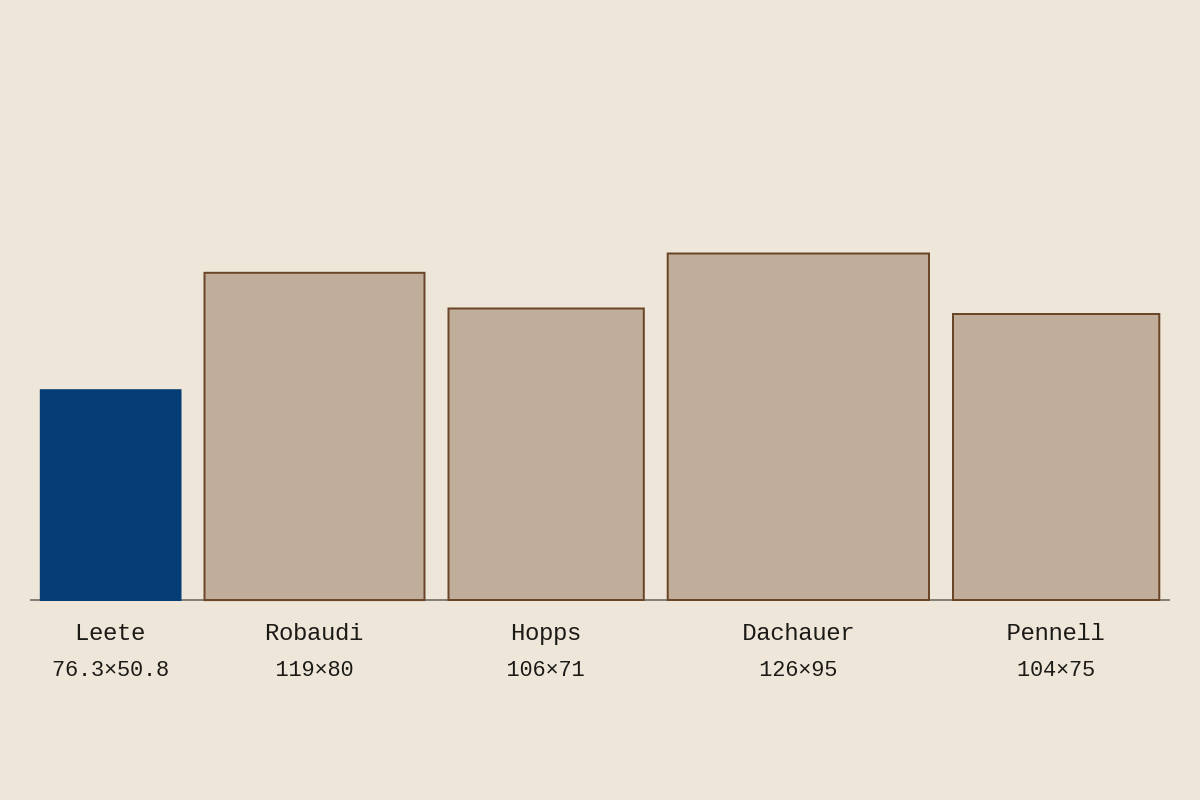
Credit line to copy
"Five Sheets to One Scale" by Spine & Watermark, https://spineandwatermark.com/print/world-war-1-propaganda-posters/, licensed under CC BY 4.0 (https://creativecommons.org/licenses/by/4.0/).Did the Kitchener image actually drive recruiting?
How much this image did for recruiting is disputed, and this page doesn't settle it.
Fame and effect are separate claims. Country Life says the picture became a success, and 1914-1918-online says the Britons design may be the most famous war poster ever made. Neither gives an enlistment figure tied to this sheet. No such figure was read for this page, so the size of the effect stays open.
A second 1914-1918-online entry points the other way. It reports that Nicholas Hiley found messages like Kitchener Wants You less common than more positive appeals to belonging to a group, and it adds that they were presumably thought less effective. That concerns how often such messages ran and how they were rated, not how many men enlisted. Hiley's article itself hasn't been read for this page, and the two entries date it differently, 1997 and 1999, so treat that as a summary of his finding.
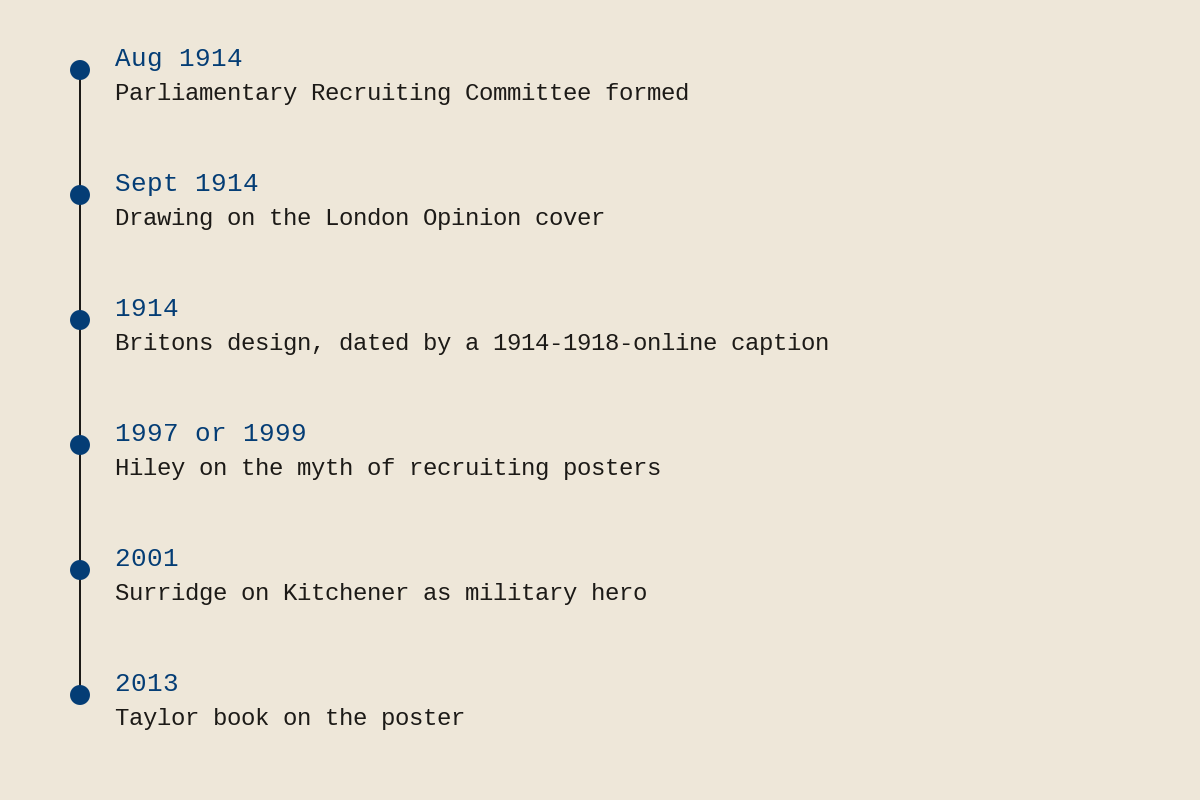
Credit line to copy
"Dated Evidence in Order" by Spine & Watermark, https://spineandwatermark.com/print/world-war-1-propaganda-posters/, licensed under CC BY 4.0 (https://creativecommons.org/licenses/by/4.0/).| Date | Event | Basis |
|---|---|---|
| August 1914 | Parliamentary Recruiting Committee formed | 1914-1918-online |
| September 1914 | Drawing on the London Opinion cover | Country Life |
| 1914 | Britons design | 1914-1918-online caption |
| 1997 or 1999 | Hiley on the myth of recruiting posters | Listed only |
| 2001 | Surridge on Kitchener as military hero | Abstract only |
| 2013 | Taylor book on the poster | Listed only |
Going by its abstract, Keith Surridge's 2001 article in Historical Research asks how Kitchener's peers and the public saw him. The abstract doesn't mention enlistment numbers. James Taylor's 2013 book is listed here without being read, so this page takes no position from it.
Where can you see these posters?
The Library's guide says its World War I posters are all available online, and the file pages in the table carry a catalogue number or digital ID wherever one is given. A record shows that an institution holds a sheet, not that it is on display, so check with the institution before you travel, and remember that the Imperial War Museums number for Britons comes from the caption cited above.
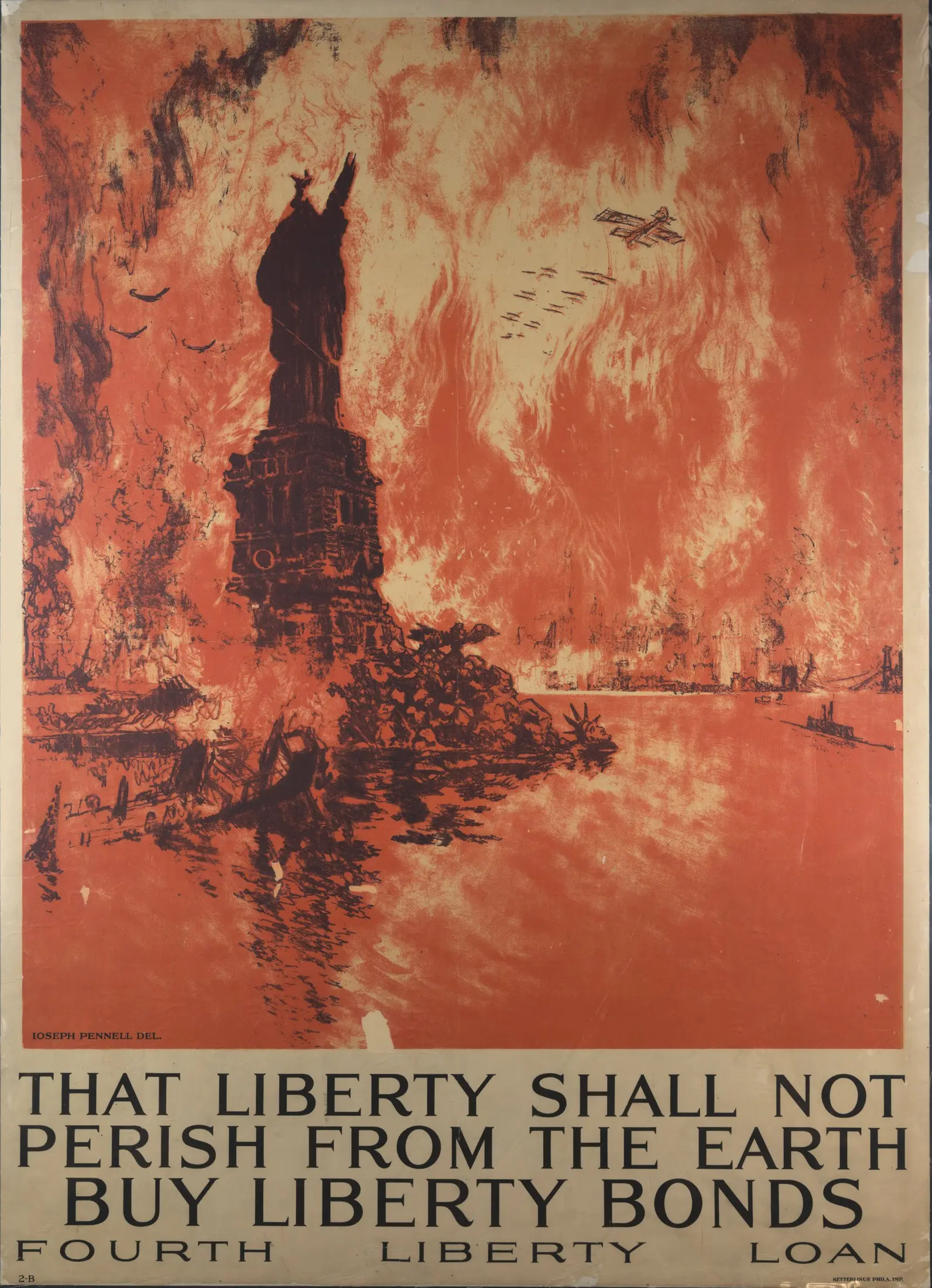
Full credit
"That liberty shall not perish from the earth" by Joseph Pennell — https://commons.wikimedia.org/wiki/File:Liberty-shall-not-perish-Pennell.jpeg — Public domain (Joseph Pennell, 1857–1926, per the file page; poster dated 1918. United States: published before 1931. European Union: author dead more than 70 years.); Library of Congress, digital ID LC-DIG-ppmsca-18343; modified: scaled down to 2200 px on the long edgeExpect a photograph of the object and not a clean page. The Library's picture of the Dachauer poster, linked in the table, includes a dark surround and color targets around the sheet.
What is still unread on the Kitchener sheet is the part nearest its first readers. The issue of London Opinion hasn't been seen here, the number printed is unknown, and the record's two process words haven't been matched to the red type and the gray portrait. An examination of the sheet itself, or a printer's account, could test all three.
Turn it over:
The record shows no reverse. The front's lower edge carries a line of small type instead, which the record as quoted on the file page doesn't transcribe.
- Intaglio vs Relief Printing: the process terms this poster's record uses and doesn't: Where screenprint falls outside the three families.
- Great Wave off Kanagawa: another print with no print run in the records read: The same question, on a woodblock.
Sources
- Alfred Leete, London opinion "Your country needs you," 1914, Library of Congress, LCCN 93517736, digital ID ppmsca.37468. Library record text as reproduced on the Wikimedia Commons file page. commons.wikimedia.orgRead: record text on the file page; holding page not readable
- Nicholas Hodge, "Curious Questions: Who created the 'Your Country Needs YOU' poster?", Country Life, 13 March 2021. countrylife.co.ukRead: full article, retrieved in the rights check
- Graphic Arts and Advertising as War Propaganda, 1914-1918-online. International Encyclopedia of the First World War, version 1.0, 2014-10-08. DOI 10.15463/ie1418.10463. encyclopedia.1914-1918-online.netRead: full entry and image captions
- Propaganda at Home (Great Britain and Ireland), 1914-1918-online. International Encyclopedia of the First World War, version 1.0, 2016-04-01. DOI 10.15463/ie1418.10880. encyclopedia.1914-1918-online.netRead: full entry and image captions
- File "Kitchener London Opinion Cover 1914 by Alfred Leete," Wikimedia Commons file page, giving digital ID ppmsca.37468. commons.wikimedia.orgRead: file page and a 960-pixel preview viewed
- Getty Research Institute, Art & Architecture Thesaurus, "screen printing," ID 300053281. getty.eduRead: full record
- Getty Research Institute, Art & Architecture Thesaurus, "relief halftone (process)," ID 300155640. getty.eduRead: full record
- Alcide Théophile Robaudi, 2me Emprunt de la Defense Nationale, 1916, Library of Congress, LCCN 99613513. Library record text as reproduced on the Wikimedia Commons file page. commons.wikimedia.orgRead: record text on the file page; holding page not readable
- Wilhelm Dachauer, 6. Kriegsanleihe! 10. Mai bis 8. Juni 1917, 1917, Library of Congress, LCCN 2006680286. Library record text as reproduced on the Wikimedia Commons file page. commons.wikimedia.orgRead: record text on the file page; holding page not readable
- Fritz Erler, Helft uns siegen!, 1917. Description on the Wikimedia Commons file page, which names the Imperial War Museums without a catalogue number. commons.wikimedia.orgRead: file page description; museum record not readable
- Harry Ryle Hopps, Destroy this mad brute. Enlist - U.S. Army, 1917, Library of Congress, digital ID LC-DIG-ds-03216. As described on the Wikimedia Commons file page. commons.wikimedia.orgRead: file page fields; holding page not readable
- Joseph Pennell, That liberty shall not perish from the earth, Fourth Liberty Loan, 1918, Library of Congress, digital ID LC-DIG-ppmsca-18343. Library record text as reproduced on the Wikimedia Commons file page. commons.wikimedia.orgRead: record text on the file page; holding page not readable
- Howard Chandler Christy, Americans All! Victory Liberty Loan, 1919, Library of Congress, LCCN 97520325. Library record text as reproduced on the Wikimedia Commons file page. commons.wikimedia.orgRead: record text on the file page; holding page not readable
- Library of Congress, "Selected Collections," World War I: Finding Images in the Library of Congress, research guide. guides.loc.govRead: full page
- Nicholas Hiley, "'Kitchener Wants You' and 'Daddy, what did YOU do in the Great War?': The Myth of British Recruiting Posters," Imperial War Museum Review 11, pp. 40–58; dated 1999 in one 1914-1918-online entry and 1997 in another. encyclopedia.1914-1918-online.netRead: bibliography only, as listed and summarized in 1914-1918-online
- Keith Surridge, "More than a great poster: Lord Kitchener and the image of the military hero," Historical Research 74, 2001, 298–313. doi.orgRead: abstract in the Crossref record; article not read
- James Taylor, Your Country Needs You: The Secret History of the Propaganda Poster (Saraband, 2013). Title and year from a search listing; the book and the publisher page were not read. saraband.netRead: bibliography only

Image credits
- "London opinion: Your country needs you" by Alfred Leete — https://commons.wikimedia.org/wiki/File:London_opinion_%22Your_country_needs_you%22_-_Alfred_Leete._LCCN93517736.jpg — Public domain (Alfred Leete, 1882–1933, per the Library record quoted on the file page; poster dated 1914. United States: published before 1931. European Union: author dead more than 70 years.); Library of Congress, LCCN 93517736; modified: scaled down to 2600 px on the long edge
- "Foot of the sheet" by Alfred Leete — https://commons.wikimedia.org/wiki/File:London_opinion_%22Your_country_needs_you%22_-_Alfred_Leete._LCCN93517736.jpg — Public domain (Alfred Leete, 1882–1933, per the Library record quoted on the file page; poster dated 1914. United States: published before 1931. European Union: author dead more than 70 years.); Library of Congress, LCCN 93517736; modified: cropped to the lowest 14 percent of the sheet, scaled down to 1800 px wide
- "Detail of the face" by Alfred Leete — https://commons.wikimedia.org/wiki/File:London_opinion_%22Your_country_needs_you%22_-_Alfred_Leete._LCCN93517736.jpg — Public domain (Alfred Leete, 1882–1933, per the Library record quoted on the file page; poster dated 1914. United States: published before 1931. European Union: author dead more than 70 years.); Library of Congress, LCCN 93517736; modified: cropped to 1000 x 700 px at the resolution of the file, not scaled
- "Small Dots, Large Dots" by Spine & Watermark, https://spineandwatermark.com/print/world-war-1-propaganda-posters/, licensed under CC BY 4.0 (https://creativecommons.org/licenses/by/4.0/).
- "Five Sheets to One Scale" by Spine & Watermark, https://spineandwatermark.com/print/world-war-1-propaganda-posters/, licensed under CC BY 4.0 (https://creativecommons.org/licenses/by/4.0/).
- "Dated Evidence in Order" by Spine & Watermark, https://spineandwatermark.com/print/world-war-1-propaganda-posters/, licensed under CC BY 4.0 (https://creativecommons.org/licenses/by/4.0/).
- "That liberty shall not perish from the earth" by Joseph Pennell — https://commons.wikimedia.org/wiki/File:Liberty-shall-not-perish-Pennell.jpeg — Public domain (Joseph Pennell, 1857–1926, per the file page; poster dated 1918. United States: published before 1931. European Union: author dead more than 70 years.); Library of Congress, digital ID LC-DIG-ppmsca-18343; modified: scaled down to 2200 px on the long edge
Cite this page
Spine & Watermark. “World War 1 Propaganda Posters: Did Kitchener’s Poster Work?.” Spine & Watermark, published November 7, 2026. https://spineandwatermark.com/print/world-war-1-propaganda-posters/. Accessed [date].
How sources are ranked · All corrections · Contact · Report an error (contact@spineandwatermark.com)